Imagine the following scenario: It’s 1:00 am, and the sound of dripping water suddenly awakens you. You turn on the lights to see a large wet spot on your wall. A pipe inside the wall has burst, and now it’s a race against time to find the water shut-off valve to prevent further damage.
How quickly would you be able to react when you’re half asleep in your pajamas and trying to figure out how to turn off the water? If you’re like most people, you might run out to check the garage. Nope. Maybe it’s outside by the water meter? No dice. What about the laundry room?
Six to twelve gallons of water are now pouring into your home with every passing minute. Your only option is to call an emergency plumber and wait for them to arrive. (And wonder what their after-hours rates will cost.)
If only you knew where that little valve was ahead of time.
Read on to learn how to find your water shut-off valve and stop the water flow during an emergency.
Locating Your Main Water Shut-Off Valve
All homeowners and residents should know the precise location of the main water shut-off valve. However, every house is different. A 70-year-old home might have it in a different location than one built 15 years ago.
Here are a few ways you can locate the valve:
- Check your crawl space: After entering the crawl space, look within a couple of feet to the right, left, or ceiling. Many houses in our area have the valve located here.
- Check your property inspection report: Look for your original home inspection report when you bought the home. It may state the location of the main shut-off valve.
- Look inside your home: Common places include the basement, garage, or near the water heater. It might also be under the kitchen sink or in a utility closet.
- Examine the perimeter of your house: If you cannot find it inside, the valve might be outside, near the foundation. Often, it’s inside a box buried in the ground or directly on the wall of the house.
- Look online: Search online for pictures of the main water shut-off valves. Knowing the valve’s appearance can make it easier to identify among other piping.
- Look at your water bill: Some utility companies will provide a diagram or description of the water shut-off valve location. You can also check their website.
How to Turn Off the Main Water Shut Off Valve
Knowing the correct water shut-off valve position prevents water damage and expensive plumbing repairs. Here’s how to do it:
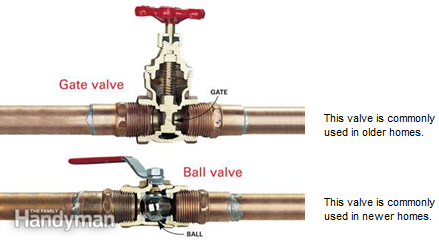
- Identify the type of valve: Most valves are either ball valves (lever-based) or gate valves (wheel-based).
- For ball valves: Turn the lever a quarter turn until it’s perpendicular to the pipe. This indicates the water is off.
- For gate valves: Turn the wheel clockwise until fully tight to engage the gate valve water shut off. This will immediately stop the flow of water.
- Check for water flow: Open a faucet to ensure no water pressure after turning off the stop valve. This confirms the valve is fully closed.
What Does the Main Water Shut Off Valve Look Like?
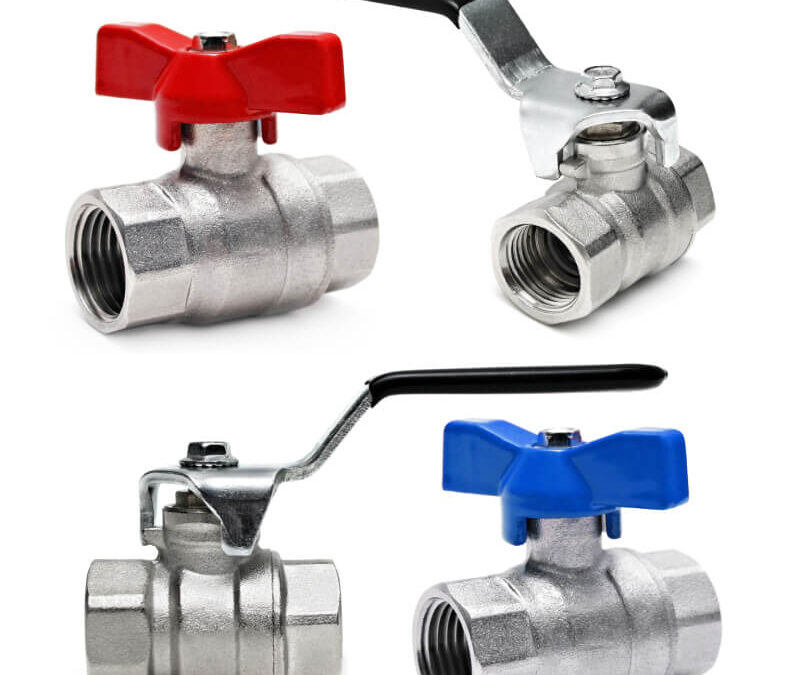
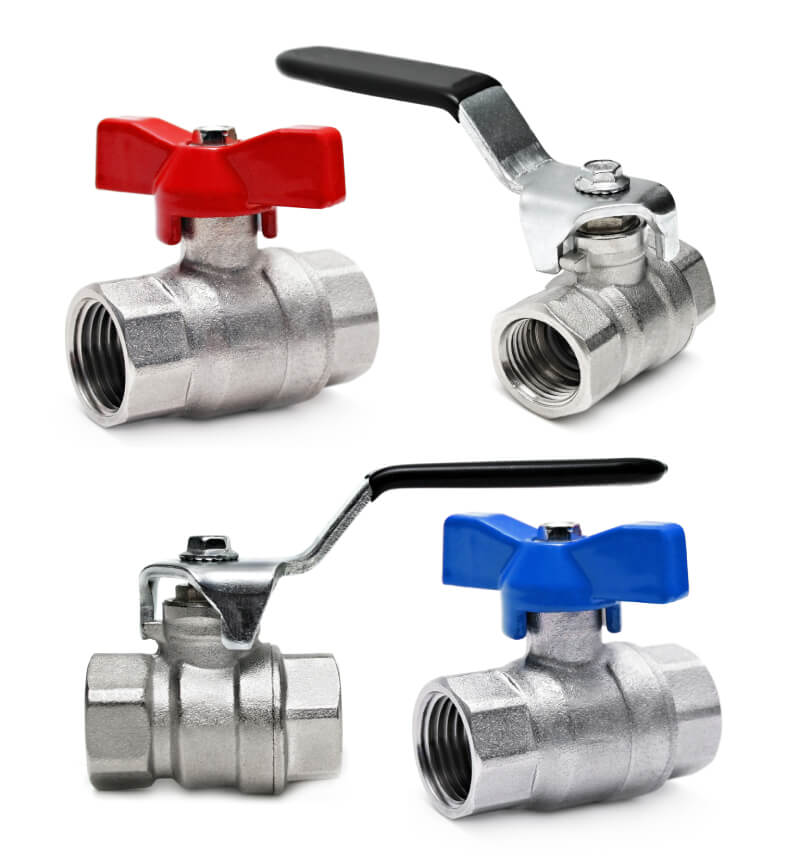
Most homes have either ball or gate valves installed as their main water shut-off valve but ball valves are the most common type. They get their name from the floating ball inside that stops or allows water to flow.
They often have a red, blue, white, or silver lever-style handle that runs parallel to the pipe when open. Rotating the lever ninety degrees to a perpendicular stops the water supply by closing the valve.
Another common type of shut-off valve resembles an outdoor faucet spigot. A round knob protrudes out from the water pipe. Rotating it clockwise gradually shuts the valve and smoothly cuts off all main water supply to the home. Turning the round knob completely counter-clockwise allows for full unobstructed water flow into the house.
The image below shows what a gate valve and ball valve look like:
The Importance of Knowing Your Valve’s Location
Ask yourself: Do I know where my main shut-off valve is located? At Robinson’s Plumbing Service, we regularly emphasize how critical this is to every homeowner.
We occasionally receive middle-of-the-night calls from homeowners panicking because water is leaking into their home from a broken pipe. While we always respond as quickly as possible, it takes time to get to the house, and water damage can happen fast. That’s why knowing the location of your main water shut-off valve and how to operate it is absolutely essential.
On May 17th at around 12:30 am, we took one of these emergency calls. A homeowner had water leaking through the ceiling due to a burst pipe in an upstairs wall. They didn’t know where the main shut-off valve was and needed help stopping the water flow.
We stayed on the phone to guide them through the most likely valve locations. Once they located the crawl space, we explained where to look and helped them identify the correct valve. Thanks to our over-the-phone coaching, they shut off the water without waiting for us to arrive and avoided the cost of an after-hours visit.
The next morning, we sent a technician to repair the pipe and restore their water.
This real-world example underscores just how critical it is to know where your main water shut-off valve is located. It should be in a clearly labeled, accessible spot—and in good working condition. At Robinson’s Plumbing Service, we often recommend relocating the valve under your kitchen sink. That way, it’s easy to reach before a vacation or in case of an emergency—no crawling under the house or digging through snow required.
Just like brakes in your car, your main shut-off valve is a vital safeguard for your home. Make sure everyone in your household knows where it is and how to use it.
Act Now to Protect Your Home
Understanding the role and operation of your main water shut-off valve is not just about preventing damage. It’s about taking proactive steps to ensure your home’s safety and security. Knowing where your valve is and how to use it prepares you to handle emergencies effectively.
Encourage everyone in your household to become familiar with the valve’s location and operation. Consider relocating the valve to a more accessible location, like under the kitchen sink, because this will simplify turning off the water in emergencies or before vacations.
Take action today to safeguard your home against unforeseen water damage. Your peace of mind is worth it.
Click below to learn more about what it will cost to fix a broken main water line leak.